

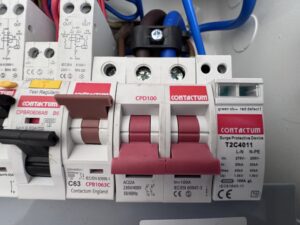
Electrical safety depends on having the right protective devices installed and correctly configured. One device commonly found in modern consumer units is the RCBO, or Residual Current Circuit Breaker with Overcurrent Protection.
An RCBO combines functions that would otherwise be provided by separate protective devices. Depending on the specific device and installation, it can provide protection against overcurrent and residual current, helping protect electrical circuits and reduce the risks associated with faults.
For homeowners, landlords and businesses, understanding what an RCBO does can make it easier to understand the protection provided by an electrical installation.
What Is an RCBO?
RCBO stands for Residual Current Circuit Breaker with Overcurrent Protection.
An RCBO combines two main protective functions:
- Overcurrent protection, similar to the function provided by an MCB
- Residual current protection, similar to the function provided by an RCD
The exact characteristics and protection provided depend on the RCBO model and its installation.
RCBOs are normally installed as part of a consumer unit or distribution board, with individual devices protecting particular circuits.
What Does an RCBO Protect Against?
An RCBO can provide protection against several types of electrical fault.
1. Overload Protection
An overloaded circuit can carry more current than it is designed to handle. Excessive current can cause conductors and electrical components to overheat.
The overcurrent protection function of an RCBO is designed to disconnect the circuit when the current exceeds the device’s specified operating limits.
This helps protect the electrical installation from damage associated with excessive current.
2. Short-Circuit Protection
A short circuit can occur when conductors come into an unintended low-resistance connection.
This can result in a very high fault current. The overcurrent protection within an RCBO is designed to disconnect the affected circuit when the relevant fault conditions are detected.
Short-circuit protection is an important part of protecting wiring and electrical equipment.
3. Residual Current Protection
Residual current occurs when some electrical current takes an unintended path, such as through earth.
The residual-current function of an RCBO can detect an imbalance and disconnect the circuit when the device’s specified operating conditions are met.
This type of protection can help reduce the risk associated with electric shock and certain electrical faults.
RCBO vs RCD: What’s the Difference?
RCBOs and RCDs are both important electrical protection devices, but they perform different functions.
An RCD primarily provides residual-current protection. It does not normally provide the same overcurrent protection function as an MCB.
An RCBO, on the other hand, combines residual-current protection with overcurrent protection in a single device.
This means an RCBO can provide protection for an individual circuit while incorporating multiple protective functions.
The appropriate arrangement depends on the design of the electrical installation and the requirements applicable to that installation.
Why Use Individual RCBOs?
One of the useful characteristics of an RCBO-based consumer unit is that individual circuits can have their own protective device.
For example, separate RCBOs might protect circuits serving areas or equipment such as:
- Lighting
- Socket outlets
- Kitchen equipment
- Outdoor electrical installations
- Electric showers
- EV charging equipment
- Other dedicated circuits
If an individual circuit develops a fault and its protective device operates, the effect can be limited to that circuit rather than automatically disconnecting several circuits protected by a shared device.
The actual arrangement depends on the consumer unit and electrical installation.
Easier Fault Identification
Individual circuit protection can also make fault identification more straightforward.
If a protective device trips, the electrician can identify which circuit is affected and investigate the relevant installation.
This can be particularly useful when diagnosing intermittent faults or electrical equipment that may be causing residual-current protection to operate.
Reducing Unwanted Disruption
Where multiple circuits share protective arrangements, a fault on one circuit can sometimes affect other circuits.
Using individual RCBOs can help provide greater circuit separation, although nuisance tripping can still occur if there is an underlying electrical fault or leakage problem.
An RCBO should therefore not simply be treated as a way to eliminate every instance of unwanted tripping.
What Are Type A RCBOs?
You may come across different RCBO types when discussing a consumer unit upgrade or electrical installation.
Type A RCD/RCBO protection is designed to respond to alternating residual currents as well as certain pulsating direct residual currents.
This can be relevant to modern electrical installations because many appliances and electronic devices use power electronics.
The correct type of RCBO depends on the equipment, circuit and overall installation design. An electrician should select protective devices that are suitable for the specific application rather than choosing a device based solely on its name or appearance.
RCBOs and Modern Electrical Installations
Modern homes and commercial premises can contain a large number of electrical devices.
Examples include:
- Computers and monitors
- LED lighting
- Washing machines
- Induction cooking equipment
- Heating controls
- Power supplies
- EV chargers
- Solar and battery equipment
- Other electronic appliances
These systems can have different electrical characteristics, so selecting appropriate protective devices is an important part of electrical design.
An electrician can assess the installation and determine which protective arrangements are appropriate for the circuits involved.
RCBOs and Consumer Unit Upgrades
If an older consumer unit is being replaced, RCBOs may form part of the new design.
However, replacing a consumer unit is not simply a matter of removing the old board and installing a new one.
The electrical installation should be assessed as part of the work. The electrician may need to consider:
- Existing circuit condition
- Earthing and bonding arrangements
- Circuit protection
- Cable condition
- Circuit loading
- Existing faults
- Compatibility of protective devices
- The type of equipment connected to each circuit
- Requirements applicable to the installation
Any necessary testing should also form part of the electrical work.
Current UK requirements should be checked against the latest applicable edition of BS 7671 and other relevant requirements before publication or installation.
RCBO Installation Should Be Carried Out Professionally
Consumer units and protective devices are safety-critical parts of an electrical installation.
Incorrect selection, wiring or testing can leave circuits inadequately protected or create additional hazards.
For that reason, RCBO installation, consumer unit upgrades and associated electrical testing should be handled by a suitably competent electrician.
A professional can assess the existing installation, identify faults and select protective equipment appropriate to the circuits involved.
For homeowners and landlords, professional assessment can also help identify problems that may not be obvious during normal use.
When Might an RCBO Need Attention?
You may need an electrician to investigate an electrical installation if:
- An RCBO repeatedly trips
- A particular circuit loses power unexpectedly
- A consumer unit shows signs of damage
- You notice burning smells, scorching or overheating
- Electrical equipment repeatedly causes protection to operate
- You are planning a consumer unit replacement
- You are adding a new high-demand electrical circuit
- You are carrying out electrical alterations or upgrades
Repeated tripping should not simply be ignored or repeatedly reset. It can indicate an underlying fault that needs investigation.
GSP Electricians for Electrical Safety and Consumer Unit Work
If you need an electrician to investigate RCBO tripping, assess circuit protection or carry out consumer unit-related electrical work in South Wales, GSP Electricians can help with professional electrical services.
The right protective arrangement depends on the existing installation, the circuits involved and the equipment being supplied.
Rather than choosing an RCBO based only on its rating or type, the installation should be properly assessed so that the protective devices are suitable for the electrical system.
For electrical faults, consumer unit work or circuit protection concerns, arrange an assessment with a qualified and suitably competent electrician.
FAQs
What does RCBO stand for?
RCBO stands for Residual Current Circuit Breaker with Overcurrent Protection. It combines residual-current protection with overcurrent protection in one device.
Is an RCBO the same as an RCD?
No. An RCD provides residual-current protection, while an RCBO combines residual-current protection with overcurrent protection.
Why does an RCBO keep tripping?
Repeated tripping can indicate an electrical fault, excessive load, residual current or an issue with connected equipment. The cause should be investigated rather than repeatedly resetting the device.
Are RCBOs used in consumer units?
Yes, RCBOs can be used as circuit protective devices within consumer units and distribution boards. The appropriate arrangement depends on the electrical installation.
Can an electrician replace an old consumer unit with RCBO protection?
An electrician can assess an existing consumer unit and determine whether an RCBO-based arrangement is appropriate. Consumer unit replacement should include consideration of the condition and safety of the existing electrical installation.