
Electrical systems in commercial and industrial buildings need to remain safe, reliable and suitable for the equipment they supply. Over time, wiring can deteriorate, connections can loosen, electrical loads can change and alterations may leave parts of an installation inadequately documented.
A Commercial Electrical Installation Condition Report (EICR) assesses the condition of an existing electrical installation and identifies defects, damage, deterioration and other issues that may affect safety.
For businesses, landlords and facilities managers, an EICR can help identify problems that need attention before they create greater safety risks or interrupt normal operations.
Understanding the types of defects commonly identified during commercial and industrial electrical inspections can also help businesses plan maintenance and remedial work.
What Is a Commercial or Industrial EICR?
An EICR is a report produced following an inspection and testing of an existing electrical installation.
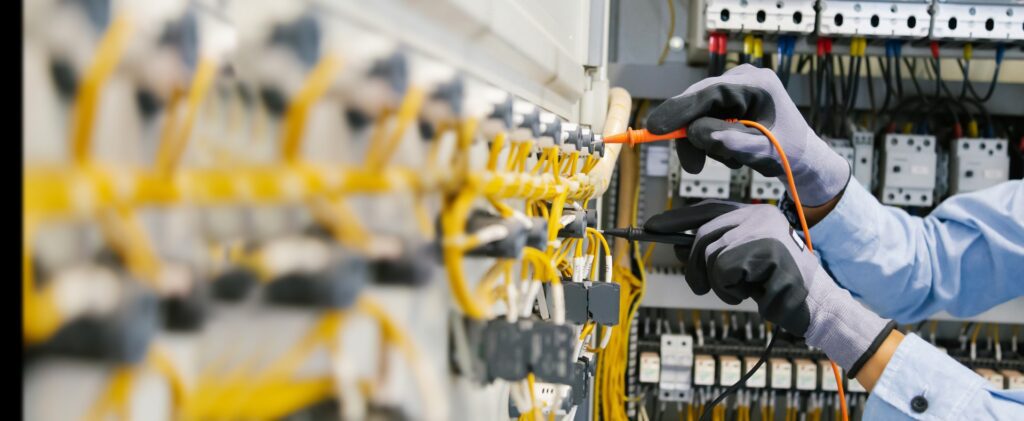
Depending on the premises and the scope of the inspection, the assessment may cover distribution boards, electrical circuits, wiring, protective devices, earthing arrangements, isolation equipment and other relevant components.
Commercial and industrial installations can be more complex than domestic systems because they may supply machinery, specialist equipment, production lines, emergency systems and multiple distribution boards.
The inspection should be appropriate to the installation and its intended use. Some defects may be visible during inspection, while others require electrical testing or further investigation.
An EICR records the findings and indicates whether remedial work or additional investigation is required.
Common Electrical Faults Found During an EICR
1. Inadequate Earthing and Bonding
Earthing and bonding arrangements form an important part of electrical safety.
During an inspection, an electrician may identify missing connections, loose terminals, corrosion or other defects affecting the effectiveness of these arrangements.
Problems with earthing and bonding can compromise the intended operation of protective measures under fault conditions.
The required arrangements depend on the electrical system and installation. Any suspected defect should be assessed by a suitably competent electrician.
2. Overloaded Circuits and Incorrect Protection
Commercial premises often have changing electrical demands as equipment is added, replaced or relocated.
An installation that was suitable for its original load may no longer be appropriate if additional machinery or equipment has been connected without a proper assessment.
An inspection may identify concerns involving:
- Circuit loading
- Conductor size
- Protective-device ratings
- Cable installation conditions
- Voltage drop
- Fault protection
Protective devices must be appropriate for the circuit and the conditions in which it operates. Incorrect selection can compromise safety or reliability.
3. Damaged or Deteriorated Wiring
Electrical cables can deteriorate through age, heat, moisture, chemical exposure, physical damage or unsuitable installation methods.
Common findings may include damaged insulation, unsupported cables, inadequate mechanical protection or cables routed through unsuitable environments.
Industrial premises may require particular attention where wiring is exposed to moving machinery, vibration, dust, water or corrosive substances.
The appropriate corrective action depends on the nature and extent of the damage.
4. Loose or Overheated Electrical Connections
Loose or deteriorated connections can lead to overheating and, in some circumstances, arcing.
Warning signs may include discolouration, damaged insulation, heat damage or visible deterioration around terminals and electrical accessories.
Not every loose connection will be visible during a routine visual inspection, so appropriate testing and investigation may also be necessary.
If burning smells, smoke or signs of severe overheating are present, the issue should be treated seriously and assessed promptly.
5. Faulty Protective Devices
Circuit breakers, fuses, RCDs and other protective devices must be suitable for their intended application and operate as required.
An EICR may identify damaged equipment, unsuitable ratings, ineffective operation or other concerns affecting electrical protection.
Testing may be required to establish whether the relevant devices perform correctly.
Where defects are identified, the electrician should explain the findings and the remedial action required.
6. Defective Switchgear and Distribution Boards
Commercial and industrial installations may contain multiple distribution boards, switchgear assemblies and control panels.
Potential defects include damaged enclosures, deteriorated components, missing covers, exposed live parts, poor labelling or equipment that is unsuitable for its operating conditions.
Older equipment is not automatically unsafe simply because of its age. Its condition, suitability and compliance with the requirements applicable to the installation need to be assessed.
Where replacement or upgrading is recommended, the work should be planned to maintain safety and minimise disruption to the business.
7. Inadequate Isolation and Switching
Electrical equipment needs appropriate isolation arrangements for safe maintenance and other work.
An inspection may identify concerns where equipment cannot be isolated appropriately, switching arrangements are unsuitable or isolation points are inadequately identified.
The correct arrangement depends on the equipment, installation design and the work that may need to be carried out.
Businesses should ensure that electrical maintenance and isolation are managed by suitably competent personnel using appropriate procedures.
8. Equipment Unsuitable for Its Environment
Electrical equipment must be suitable for the conditions in which it is installed.
For example, a workshop, food-production area, warehouse or outdoor installation may present different environmental challenges.
An inspection may identify equipment or enclosures that do not provide appropriate protection against the expected exposure to water, dust, chemicals or mechanical damage.
IP ratings can help describe protection against solid objects and water, but selecting equipment also requires consideration of the wider environment and installation conditions.
9. Poor Cable Termination and Containment
Cable glands, trunking, conduit and other containment components help protect and organise electrical wiring.
Potential defects include damaged containment, unsuitable cable entries, poor terminations, missing protective components and inadequate mechanical support.
Poorly installed cable entries can also affect an enclosure’s intended environmental protection.
The condition and suitability of cable containment should be considered in the context of the installation and the environment.
10. Inadequate Separation Between Circuits
Some installations contain power, control, communications, emergency and fire-related circuits.
Where different circuits share containment or pass through the same equipment, the design must provide suitable separation and protection for the relevant systems.
An inspection may identify arrangements that do not provide appropriate segregation or could compromise the operation or safety of connected equipment.
The requirements depend on the circuit types, installation design and applicable standards.
11. Missing Circuit Identification and Documentation
Accurate identification helps electricians and maintenance teams understand which circuits supply particular equipment.
An EICR may highlight missing, inaccurate or unclear circuit labels, warning notices, diagrams or distribution-board schedules.
Documentation may also be incomplete where previous alterations have not been recorded properly.
Keeping circuit identification and electrical records up to date can support maintenance planning, fault finding and future changes to the installation.
12. Unauthorised Alterations or Additions
Electrical installations often change as businesses expand, relocate equipment or adapt their premises.
Problems can arise when alterations are made without appropriate design consideration, inspection, testing or documentation.
An EICR may identify additions that appear unsuitable or require further investigation.
Where records are missing, this does not automatically prove that an installation is unsafe. However, the electrician may need to carry out additional checks to establish its condition.
13. Insufficient Capacity for Current Loads
A business may add machinery, heating equipment, EV charging points or other electrical loads over time.
These changes can affect the suitability of the existing electrical infrastructure.
An assessment may need to consider load demand, conductor capacity, voltage drop, fault levels and the coordination of protective devices.
The aim is to establish whether the installation remains suitable for its current use and whether any improvements are necessary.
14. Defects Affecting Emergency Electrical Supplies
Some commercial and industrial premises rely on emergency electrical systems, such as standby generators, UPS equipment, changeover arrangements or emergency lighting circuits.
Where these systems fall within the scope of the inspection, defects affecting their electrical installation may need to be recorded.
An EICR should not be assumed to replace all separate specialist inspections, functional tests or maintenance checks required for emergency equipment.
The inspection scope and any additional testing requirements should be confirmed for the premises.
15. Defects Requiring Further Investigation
Some issues cannot be fully assessed during the initial inspection.
For example, a suspected defect may be concealed, inaccessible or dependent on additional testing to establish its cause and extent.
In such cases, the report may include an FI — Further Investigation Required classification.
An FI observation should not be ignored simply because the defect has not yet been confirmed. Further investigation is needed to determine whether remedial work is required.
Understanding EICR Classification Codes
EICR observations are commonly assigned classification codes according to their significance.
| Code | Meaning | General implication |
|---|---|---|
| C1 | Danger Present | Immediate danger; urgent action is required to remove the danger. |
| C2 | Potentially Dangerous | Urgent remedial action is required. |
| C3 | Improvement Recommended | Improvement is recommended, but the observation does not by itself make the report unsatisfactory. |
| FI | Further Investigation Required | Further investigation is required without undue delay to establish the condition of the installation. |
A report containing a C1 or C2 observation will generally be assessed as unsatisfactory. An FI observation also generally results in an unsatisfactory report because the installation’s condition has not been fully established. A C3 observation alone does not generally make an EICR unsatisfactory.
The classification should reflect the actual finding and applicable assessment criteria. Businesses should discuss the report with the inspecting electrician to understand the risks, priorities and appropriate next steps.
What Happens If a Commercial EICR Is Unsatisfactory?
An unsatisfactory report indicates that one or more findings require further action.
The next steps depend on the observations recorded and the installation involved. They may include:
- Reviewing each observation with the inspecting electrician.
- Prioritising urgent safety issues.
- Arranging further investigation where an FI code has been recorded.
- Obtaining a quotation for the required remedial work.
- Completing the agreed repairs or improvements.
- Arranging any necessary inspection, testing and documentation after the work.
Not every unsatisfactory EICR requires a complete rewire or replacement of the entire electrical installation. Some findings may be resolved through targeted repairs, while others may require more extensive work.
How Businesses Can Reduce Electrical Risks
Regular maintenance and well-managed electrical alterations can help businesses identify problems before they become more serious.
Practical measures include:
- Arranging appropriate electrical inspections.
- Investigating repeated circuit trips or signs of overheating.
- Recording electrical alterations and additions.
- Keeping distribution-board labels and circuit schedules accurate.
- Using suitable equipment for the operating environment.
- Addressing defects identified during inspections.
- Maintaining records of electrical testing and remedial work.
- Ensuring electrical work is undertaken by suitably competent personnel.
The appropriate inspection frequency depends on the type of premises, the installation, its use and relevant requirements. It should be determined using applicable guidance rather than applying one interval to every business.
Commercial and Industrial EICR Services in South Wales
GSP Electricians provides electrical services for businesses and property owners across South Wales.
If you manage commercial premises, industrial facilities or business property, an electrical inspection can help establish the condition of the installation and identify defects requiring attention.
Where an EICR identifies problems, the next step is to understand each finding and determine what remedial work or further investigation is appropriate.
For businesses in areas including Cardiff, Pontypridd, Merthyr Tydfil, Aberdare, Newport and surrounding locations, contact GSP Electricians to discuss your electrical requirements and confirm the availability of the relevant service.
Final Thoughts
Commercial and industrial EICRs can identify a wide range of electrical concerns, from damaged wiring and ineffective protective devices to documentation gaps and defects requiring further investigation.
Understanding the classification codes helps businesses distinguish between urgent hazards, potentially dangerous conditions, recommended improvements and findings that need further assessment.
The most appropriate response depends on the actual findings and the condition of the installation. Addressing defects promptly can help businesses manage electrical risks and plan necessary maintenance.
FAQs
What faults are commonly found during a commercial EICR?
Common findings can include inadequate earthing and bonding, damaged cables, unsuitable protective devices, defective distribution equipment, poor cable terminations, inadequate identification and defects requiring further investigation.
What makes a commercial EICR unsatisfactory?
C1 and C2 observations generally result in an unsatisfactory report. An FI observation also generally results in an unsatisfactory outcome because further investigation is needed. A C3 observation alone does not generally make the report unsatisfactory.
Does an unsatisfactory EICR mean a full rewire is required?
No. The remedial work depends on the defects identified. Some findings can be resolved through targeted repairs, while others may require more extensive electrical work.
What does FI mean on an EICR?
FI means Further Investigation Required. It indicates that the condition or significance of an issue cannot be fully established from the initial inspection and further investigation is needed.
How often should a commercial property have an EICR?
The appropriate interval depends on the type and use of the premises, the installation and applicable guidance. Businesses should obtain advice based on their specific circumstances rather than assuming one interval applies to every property.