
The consumer unit is one of the most important parts of a property’s electrical installation. It distributes electricity to individual circuits while providing protective devices designed to disconnect circuits when certain faults occur.
Older properties may still have outdated fuse boards or consumer units that no longer provide the level of protection expected from a modern installation. At the same time, households are using more electrical equipment than ever, including EV chargers, home offices, appliances and other high-demand equipment.
Choosing a replacement consumer unit therefore involves more than simply selecting a larger box. The existing electrical installation, number of circuits, available space and the property’s future requirements all need to be considered.
What Is a Consumer Unit?
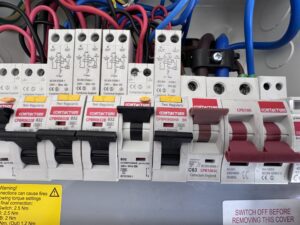
A consumer unit, sometimes still called a fuse box or fuse board, is the point where electricity entering a property is distributed into separate electrical circuits.
Depending on the installation, a consumer unit can contain protective devices such as:
- Circuit breakers
- RCDs
- RCBOs
- Surge Protection Devices (SPDs)
The exact arrangement depends on the design of the installation and the protection required for the circuits.
If an older fuse board is being replaced, the electrician should assess the existing circuits rather than simply fitting a new unit and assuming everything else is suitable.
How Much Capacity Does a Consumer Unit Need?
One of the first considerations is the number of circuits already present.
A property might have separate circuits for lighting, sockets, cooking appliances, showers, heating or other equipment. Additional circuits may also be needed if the property is being extended or upgraded.
It can therefore be useful to allow some spare capacity where practical, particularly if future electrical work is anticipated.
For example, a homeowner considering an EV charger, additional outdoor sockets, new lighting or other electrical installations may want the existing consumer unit arrangement assessed before deciding on a replacement.
The correct size isn’t simply a matter of choosing the consumer unit with the highest number of ways. The electrician should consider the actual installation and its foreseeable requirements.
RCBOs and RCD Protection
Modern consumer units can use different arrangements of protective devices.
An RCBO combines residual current protection with overcurrent protection for an individual circuit. One potential advantage of individual RCBO protection is that a fault affecting one circuit does not necessarily disconnect several other circuits at the same time.
For example, if a fault develops on an outdoor socket circuit, appropriate individual circuit protection can help prevent unrelated circuits throughout the property from being unnecessarily interrupted.
The correct protective arrangement depends on the installation and should be assessed by a competent electrician.
What Is Surge Protection?
A Surge Protection Device (SPD) is designed to help protect electrical equipment against certain transient overvoltages.
This can be particularly relevant in modern homes containing sensitive electronic equipment such as computers, televisions, appliances and home networking equipment.
Whether and how surge protection should be incorporated depends on the particular installation and current requirements. It should therefore be considered as part of the overall consumer unit assessment rather than treated as a separate add-on without checking compatibility.
Choosing the Right Consumer Unit Enclosure
The enclosure is another important consideration.
Consumer units are available in different designs and materials, but the choice should be based on the requirements of the electrical installation and applicable UK standards.
A modern replacement should be appropriate for its intended location and installation conditions.
This is one reason consumer unit replacement isn’t simply a case of buying a unit online and transferring the existing wiring into it.
Where Should a Consumer Unit Be Located?
The position of the consumer unit matters for both accessibility and safety.
It should be installed somewhere that allows the protective devices to be accessed and operated appropriately. The location also needs to be suitable for the environmental conditions.
Areas exposed to excessive moisture, heat or other unsuitable conditions may not be appropriate.
If you’re considering moving a consumer unit as part of a refurbishment or renovation, the proposed location should be assessed before any work begins.
What Happens During a Consumer Unit Replacement?
A consumer unit replacement involves considerably more than removing the old box and fitting a new one.
A suitable installation will generally involve assessing the existing circuits, safely isolating the electrical supply, connecting the circuits to the new protective devices and carrying out appropriate testing.
The electrician may need to identify issues with the existing installation before the replacement can be completed.
Testing can include checks such as:
- Continuity
- Insulation resistance
- Polarity
- Protective conductor arrangements
- RCD operation where applicable
- Other relevant electrical safety tests
The exact tests and procedures depend on the installation.
Does a New Consumer Unit Fix Existing Wiring Problems?
Not necessarily.
Replacing an old consumer unit does not automatically make an older electrical installation safe or compliant in every respect.
For example, an electrician may identify damaged cables, inadequate connections, deteriorated accessories or other issues during the assessment.
Where problems are found, they may need to be addressed separately.
This is particularly relevant in older properties where the wiring has been modified or extended over many years.
Consumer Units and Future Electrical Requirements
Electrical demand can change considerably over the life of a property.
A homeowner may later install:
- An EV charger
- Additional sockets
- Outdoor lighting
- Electric heating
- New kitchen appliances
- Garden electrical equipment
- Other dedicated circuits
Thinking about likely future requirements before replacing the consumer unit can help avoid unnecessary alterations later.
However, future-proofing doesn’t mean installing the largest possible consumer unit regardless of need. The proposed installation should remain appropriate for the property’s actual electrical requirements.
Is Consumer Unit Replacement a DIY Job?
Consumer unit replacement is not a suitable DIY project for someone without the appropriate electrical competence.
The work involves the property’s main electrical supply and multiple circuits. Incorrect connections or inadequate testing can create serious safety risks.
A qualified and competent electrician should assess the installation, carry out the replacement and complete the appropriate testing and certification requirements.
If you’re unsure whether your existing fuse board or consumer unit needs replacing, an electrician can assess its condition and explain the available options.
When Might a Consumer Unit Need Replacing?
There isn’t one single age at which every consumer unit automatically needs replacement.
However, an assessment may be worthwhile if you have:
- An older fuse board
- Repeated electrical faults
- Signs of overheating or damage
- Outdated protective devices
- A planned electrical upgrade
- An upcoming EV charger installation
- Additional circuits being added
- Concerns about the condition of the existing installation
Visible signs such as burning, discolouration, unusual smells or excessive heat around electrical equipment should not be ignored.
If you notice a potentially dangerous electrical fault, avoid interfering with the equipment and seek professional assistance.
Consumer Unit Replacement Across South Wales
Properties across South Wales can have very different electrical installations depending on their age, construction and previous alterations.
Homeowners in areas such as Cardiff, Pontypridd, Aberdare, Merthyr Tydfil, Mountain Ash and surrounding communities may therefore have different requirements when considering a consumer unit upgrade.
A proper assessment of the individual installation is more useful than choosing a consumer unit based solely on the age of the property or the number of circuits.
GSP Electricians Ltd provides electrical installation, repair, inspection and consumer unit-related services across its South Wales service area.
Final Thoughts
Choosing a new consumer unit involves more than deciding how many ways the unit should have.
The electrician needs to consider the existing circuits, protective devices, available capacity, installation location and any future electrical requirements. RCBO arrangements and surge protection may also be relevant depending on the installation.
Most importantly, replacing a consumer unit should be treated as professional electrical work rather than a straightforward DIY upgrade. Proper assessment and testing help ensure that the replacement is suitable for the wider electrical installation.
If you’re considering a consumer unit replacement or fuse board upgrade, GSP Electricians Ltd can assess your requirements and discuss the appropriate options for your property across South Wales.
FAQs
When should a consumer unit be replaced?
There is no single age at which every consumer unit must be replaced. Replacement may be worth considering where the unit is outdated, damaged, has unsuitable protection or where the electrical installation is being significantly upgraded.
What is the difference between a fuse board and a consumer unit?
The terms are often used interchangeably by homeowners. A traditional fuse board may use replaceable fuses, while modern consumer units generally use circuit breakers and other protective devices.
Are RCBOs better than traditional RCD arrangements?
RCBOs provide combined residual current and overcurrent protection for individual circuits. This can help limit the effect of a fault to the affected circuit, but the appropriate arrangement depends on the installation.
Should a new consumer unit include surge protection?
Surge protection may be appropriate depending on the electrical installation and current requirements. An electrician can assess whether an SPD should be incorporated into the replacement consumer unit.
Can I replace my consumer unit myself?
Consumer unit replacement is not a suitable DIY task for someone without the necessary electrical competence. The work involves the main electrical supply and requires appropriate testing and certification.
Does replacing a consumer unit mean the whole house needs rewiring?
Not necessarily. A consumer unit can sometimes be replaced without completely rewiring a property, but the existing circuits should be assessed first. If significant problems are identified, additional electrical work may be required.